
Garbage Disposal Repair · Albany, GA
Garbage Disposal Repair in Albany, GA: A Disposal That Hums, Jams or Drips Under the Sink
The disposal hums and nothing turns, or the cabinet floor is wet, or the sink will not drain at all. Each of those points to a different fault, and the quickest way to a fix is knowing which one you have before anyone arrives.
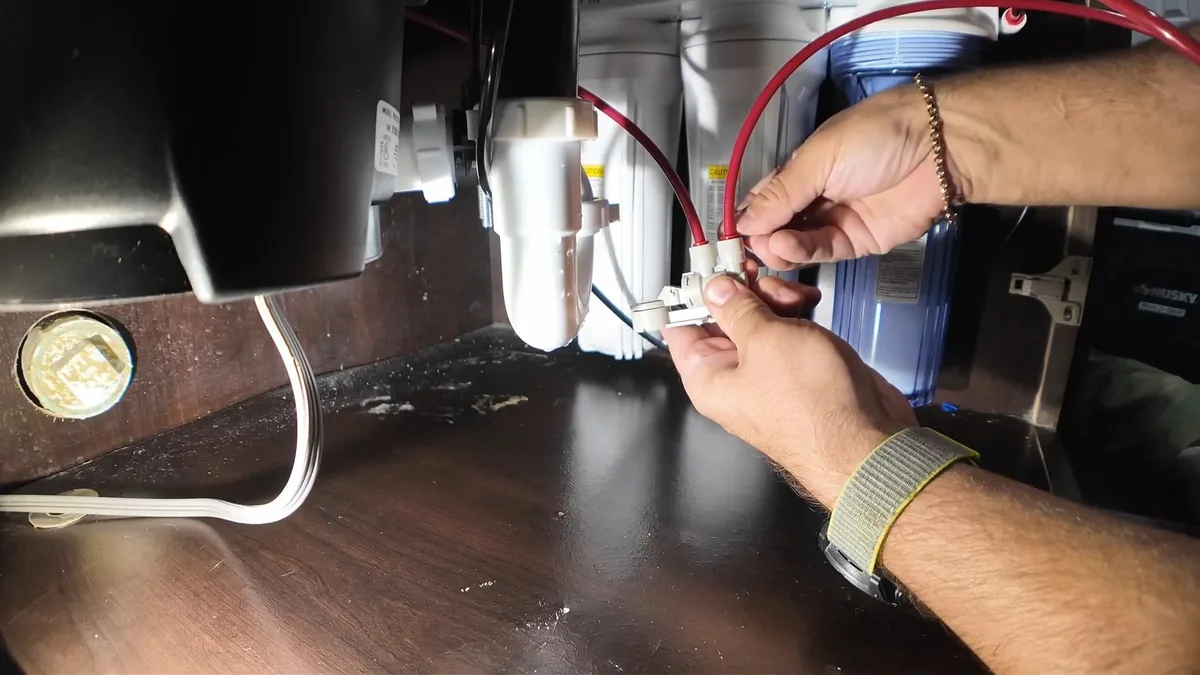
Hum, silence or drip: what each disposal symptom means
| What you see or hear | Most likely cause | Safe first step |
|---|---|---|
| A low hum, and the blades do not turn | A jam: something is wedged against the flywheel | Switch the unit off at the wall, then use the hex socket under the unit or a wooden spoon handle from above to work it loose. |
| Total silence when you flip the switch | A tripped overload or a dead outlet | Press the red reset button on the underside, and check the outlet or breaker. |
| Water pooling in the cabinet | A leak at the sink flange, the dishwasher hose or the unit's seams | Dry everything, run water, and watch where the first drop forms. |
| Water backs up into the other side of the sink | A clog beyond the disposal | Do not run the unit; see the section on drains below. |
| Grinding or rattling | A foreign object, such as a utensil or bone | Switch it off and look with a flashlight, never with a hand. |
Never put a hand into a disposal, even when it is switched off. If the unit is wired rather than plugged in, switch off the breaker as well before reaching for any tool.
What is worth trying before you call
- Switch it off. Turn off the wall switch and unplug the unit, or trip its breaker.
- Look for the obvious. Shine a light down the drain and remove any visible object with tongs.
- Turn the blades by hand. Use the hex key socket at the bottom of the unit and work it back and forth until it spins freely.
- Press reset. Wait a few minutes after a jam, then press the red button on the underside.
- Test it. Run cold water, switch the unit on, and listen. If it hums again or the reset trips, stop.
If the reset keeps tripping, the motor is probably failing or the jam is not truly cleared. Forcing it risks the motor, the wiring and your fingers, and the unit is often better replaced than restarted over and over.
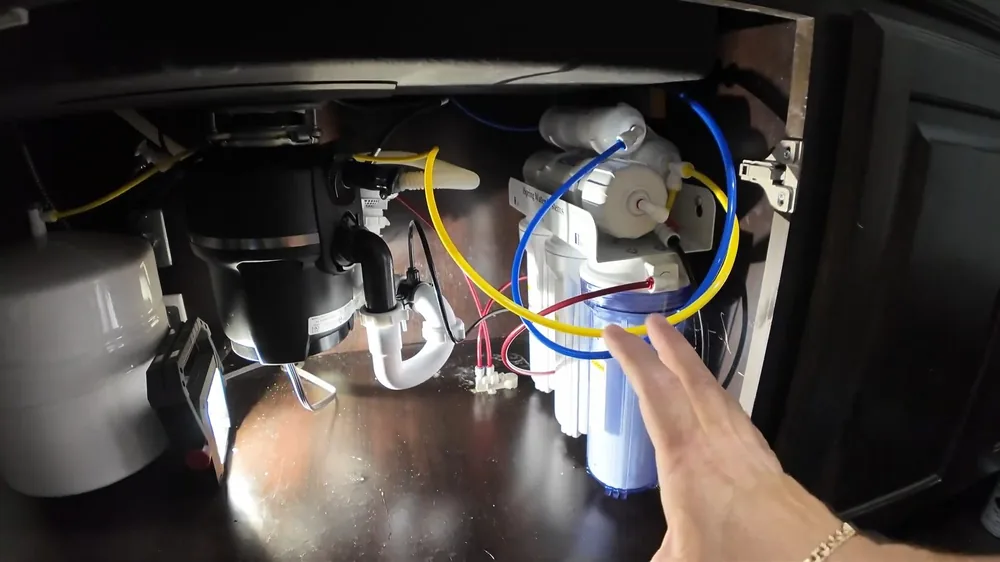
Tell the dispatcher what you see and hear. The line is open 24/7.
Repair or replace: the questions that decide it
A disposal is a simple machine, and the decision is mostly about age and where the fault is. A jam or a loose connection is a repair. A seized motor or a cracked housing is not, because the leak is in the body of the unit, and no seal will hold on a cracked casing. Ask the plumber these questions before agreeing to either.
- How old is the unit, and what has failed? An older unit with a bad motor is a replacement.
- Is the leak at the flange or a hose, which can be reseated, or in the unit body?
- Is the horsepower right for the household? A larger family or heavy use may need a stronger unit.
- Does the quote include a new mounting kit, the discharge connection and the dishwasher hose?
- Is the electrical hookup, a cord or a hardwired connection, included?
If you are replacing, the work is straightforward but not trivial: the sink flange is resealed, the old unit comes off its mount, and the new one is wired and tested. A bad seal at the flange is the most common reason a new disposal leaks.
When the problem is the drain, not the disposal
A disposal feeds the kitchen drain, so a blocked line shows up as a sink that fills while the unit runs. Try the unit with the water on. If water rises on the other basin, or comes back up in the dishwasher, the clog is downstream. That is a job for a drain clearing, not for a new disposal, and a kitchen line that keeps clogging may need high-pressure jetting to clear grease from the pipe wall.
If other fixtures back up as well, such as a tub or a floor drain, the problem is likely in the main line, which is a matter for the sewer line page and for the city if the blockage is in the public main. Report that to the City of Albany Sewer Division, which keeps an on-call technician after hours.
Disposal habits: what to grind and what to keep out
Most disposal failures begin at the sink. These habits make the difference.
- Run cold water before, during and for about a quarter minute after grinding.
- Feed it small amounts instead of a full load at once.
- Skip grease, oil and fat; they cool and coat the pipe downstream.
- Keep out fibrous scraps such as corn husks and celery, along with coffee grounds in bulk and bones.
- Never pour drain chemicals into a disposal that is jammed or leaking.
Hard water adds to the wear. The U.S. Geological Survey describes the Upper Floridan aquifer under this part of Georgia as yielding hard water, and scale on a disposal's parts and the drain tailpiece is plausible, though the city's water quality report does not give a hardness number. Citrus peels and a cold flush do not fix mineral scale, so a persistently slow unit is worth showing to a plumber.
Renting, older kitchens and who authorizes the work
Most Albany households rent, at about 62 percent in American Community Survey data via Point2Homes. In a rental, the disposal usually belongs to the landlord, so report a leak or a failed unit in writing before replacing anything, and ask who pays. Do not swap a landlord's disposal on your own.
Many homes here date from the 1970s or earlier, and an older kitchen can have worn shutoff valves, a corroded drain trap or a cabinet floor already softened by years of slow drips. If water has been sitting in the cabinet, ask the plumber to check the base for damage, and read the leak detection page if a slow leak is suspected elsewhere. Fixing a disposal can reveal a leaking supply line, a drain trap or a faucet at the same sink, which is why the faucet and sink repair page is worth a look too.
Before work begins, check the plumber's Georgia license class through the Secretary of State's lookup. We found no Albany city statement about permits for a like-for-like disposal swap, so ask the plumber or the Development Services office. Commercial kitchens should say so when they call, since the unit and the grease controls differ.
Disposal not working? Call the line
Tell the dispatcher what the unit is doing and whether the cabinet is wet, and the call is routed to a plumber serving your area.