
Sewer Line Repair · Albany, GA
Sewer Line Repair in Albany, GA: Backups in More Than One Drain, and Who Owns the Pipe
When several drains back up at once, the problem is usually not in the fixtures. It is in the pipe that carries everything out of the house, and the first questions are where it is broken and whose pipe it is.
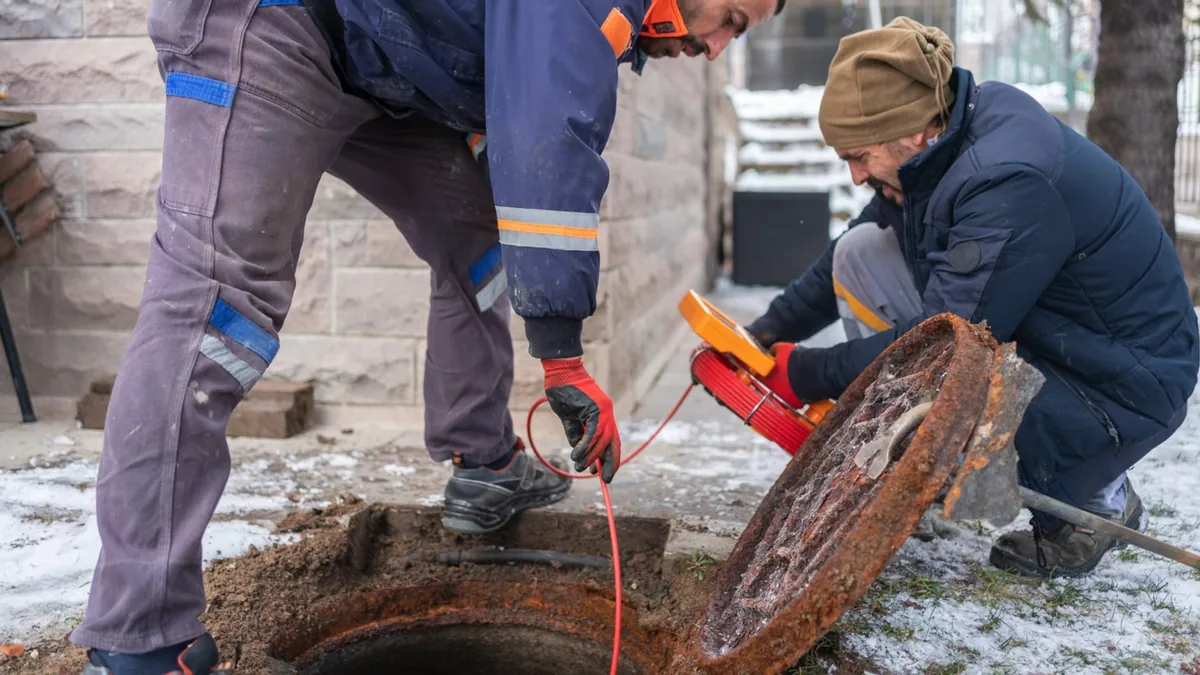
Four signs it is the line, not the drain
A single slow sink is usually a drain clog, and the page on clearing a clogged sink or tub is the place to start. The sewer line is the shared pipe that every drain in the house empties into, so when it fails, the symptoms show up in more than one place.
- More than one fixture backs up or drains slowly at the same time.
- The toilet gurgles or bubbles when the washing machine or a tub drains.
- Water or sewage appears at the lowest drain in the house, such as a floor drain or a tub on the ground floor.
- The problem returns soon after a drain has been cleared, or there is a persistent sewer smell in the yard or near a cleanout.
One sign alone is a reason to look. Two or more is a reason to stop using water and call. Each flush or load of laundry adds water to a line that cannot take it, and it has nowhere to go but back up into the house.
Who owns which pipe, and who to call first
The sewer system has two parts that homeowners tend to treat as one. The main runs under the street and belongs to the city. The lateral runs from the main to the house. The public sewer is run by City of Albany Utilities. Its Sewer Division takes reports at 229-302-1800 and puts an on-call technician on that number after hours, per the city's Sewer Division page.
The city pages are silent on who owns the lateral and the cleanout, and no page we found settles it, so we will not guess. Ask the Sewer Division directly, and ask your plumber to note on the camera footage where the blockage or break sits relative to the cleanout and the property line.
| Situation | First call | What to tell them |
|---|---|---|
| Several houses on the street are backing up | City Sewer Division, 229-302-1800 | Your address and which neighbors are affected. |
| Only your house, with a cleanout in the yard | The dispatch line, (229) 367-1193 | Which fixtures, when it began and whether you have used a plunger or chemicals. |
| Sewage is already inside the house | The dispatch line, and the Sewer Division if neighbors are affected | What has been shut off and what rooms are wet. |
The camera inspection, and what it has to show you
Do not agree to a dig or a replacement without a camera look first. A camera on a cable runs into the line through a cleanout and shows what is there: a blockage, a crack, a joint that has separated or a section that sags and holds water. It is how a plumber decides between clearing, patching and replacing.
Ask for the footage, and ask for these points in writing:
- Where the problem is, measured from the cleanout or the house.
- What the pipe is made of at that point, as seen on camera.
- Whether the problem is debris, a crack, a separation or a sag.
- How long the damaged section is and whether the rest of the line looks sound.
- Whether the line was cleared and then re-inspected.
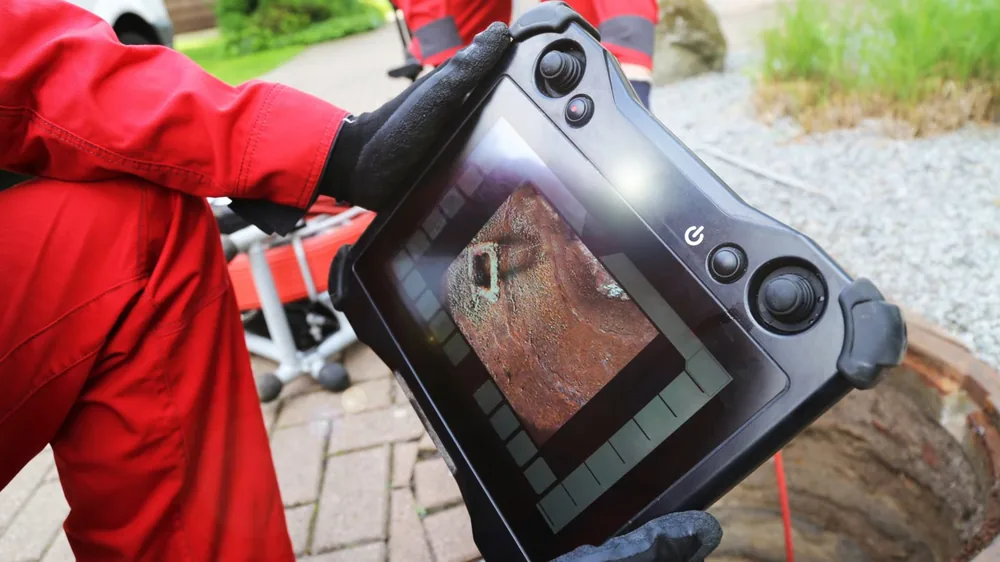
Main line cleaning and snaking belong to the same conversation. A plumber usually clears the main from the cleanout with a cable machine or a jetting hose, and then sends the camera down to see what the clearing revealed. A cleared line that the camera shows to be cracked is a line that will clog again, so ask for the camera after the clearing, not just before it. Clogs at a single fixture stay with clearing an interior drain; the main line is this page's job.
Stop using water and call. The line is open 24/7.
Spot repair, replacement or no-dig: how the choice gets made
Once the camera shows a defect, three paths are possible. A spot repair replaces one damaged section and suits a localized break. Replacement suits a line that is failing along much of its length. A no-dig method, covered on the trenchless sewer repair page, lines or replaces the pipe without trenching the yard, and it depends on the line's condition and access.
Which one fits is a function of the footage, the depth, the landscaping and what is on top of the pipe. Ask the plumber to explain why the option they recommend beats the others for your line, and to say what the work will do to the yard, the driveway and any trees nearby.
If the pipe is cast iron, clay or plastic, ask the plumber to name it from the footage. We found no Albany-specific source on which materials are common in which neighborhoods, so a named material from your own line is worth more than any generalization.
Before anyone digs: 811 and the permit question
The state's 811 service asks for a call at least three business days before digging, and it asks for hand digging within 18 inches of marked lines. A homeowner or the excavator can place the call, so ask which of you is doing it, and ask for the ticket number.
We could not confirm from a city page whether a sewer lateral repair needs a permit, so ask the plumber, check with Development Services if unsure, and ask who schedules any inspection. The city applies the 2024 plumbing code with Georgia amendments, and the permit steps are set out under the water heater installation page.
If sewage is already inside the house
Treat sewage as a health hazard, not just a mess. Stop using every drain and toilet. Keep children and pets out of the affected rooms, wear gloves and boots if you must enter and wash your hands afterward. Do not run a vacuum or a fan through the area.
Photograph the damage before cleanup, shut off water use and call the dispatch line. After the line is cleared, the wet areas still need removal and drying, which is separate work covered under drying out wet rooms.
Albany ground: collapses, floods and older lines
The city announced the closure of W. 2nd Avenue at N. Cleveland Street after a sewer collapse in December 2025, and it closed Hilsman Park over a sinkhole in June 2026. Neither notice states a cause. The U.S. Geological Survey describes the Dougherty Plain as karst terrain. We are not linking these events to any private line, but a depression or wet spot over a sewer line is worth a camera inspection and a call to the city if it is in the public right of way.
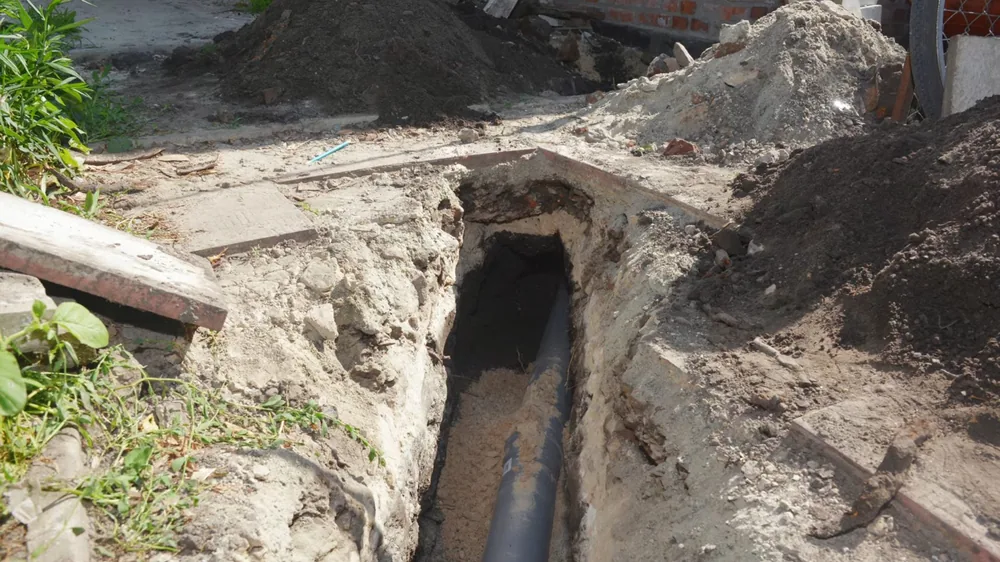
Rain adds to the load. Albany averages about 52.5 inches a year, with the wettest months in summer, and saturated soil pushes against clay and cast iron lines and works roots into open joints. If drains run slowly or gurgle only after heavy storms, tell the plumber that pattern, because it points to a line problem the camera can show rather than a simple clog.
Housing is older here, with a median build year of 1974 in the survey data, which is a reason to insist on the camera rather than assume a line is sound. Most households rent, so tenants should tell the landlord or property manager as soon as a main line is involved and ask who authorizes the work.
Some Albany neighborhoods were on septic into recent years; WALB reported in 2019 that about 60 homes on Shadowlawn Drive were. This site does not cover septic service, and the Sewer Division can confirm how your address is served. Commercial and industrial lines are different jobs, so say so when you call. Before work begins, check the plumber's Georgia license class through the state license lookup.
Backups in more than one drain? Call the line
Tell the dispatcher which fixtures are backing up, and the call is routed to a plumber serving your area.