
Water Softeners · Albany, GA
Water Softener Installation in Albany, GA: Test the Water, Then Choose a Softener, a Filter or Both
Hard water leaves white crust on fixtures and scale in heaters, and a lot of equipment is sold to fix it. This page explains what a softener does, what a filter does, and how to avoid paying for the wrong one.
Is Albany water hard? Test yours before buying equipment
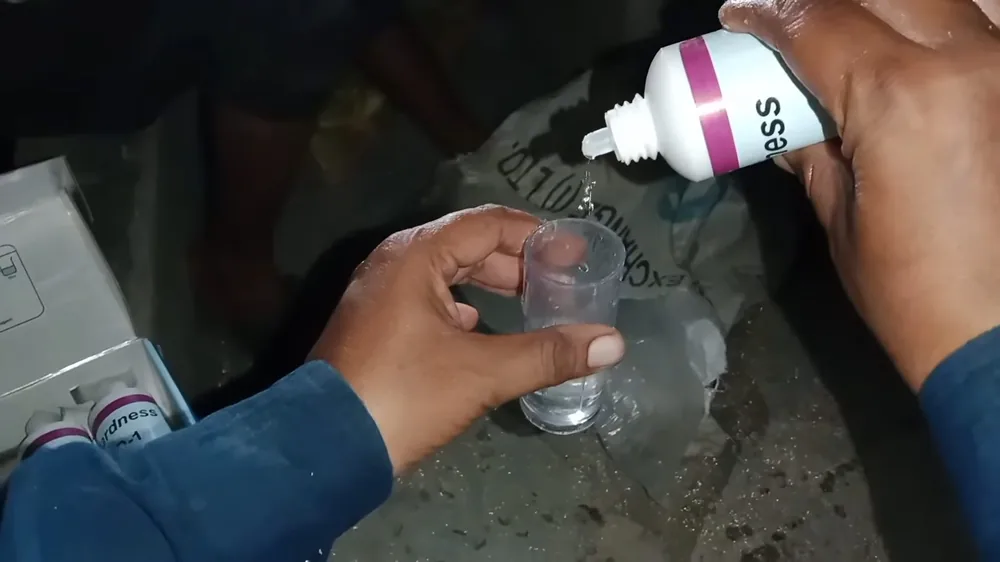
Test the water before anyone sells you equipment. A home kit that reports hardness in grains per gallon, or a lab test, gives you a number to write down, and City of Albany Utilities can be reached at 229-883-8330 to ask whether hardness data exists for your area.
Here is what is on record. The U.S. Geological Survey report on the Dougherty Plain, from 1987, says the Upper Floridan aquifer "yields hard, calcium bicarbonate-type water." That describes the aquifer, not the water that reaches your tap. City of Albany Utilities draws on groundwater wells in four aquifers, and its 2025 water quality report does not list hardness, pH or iron. Do not buy equipment on a salesperson's claim about Albany water.
Softener or filter: two different jobs
| Equipment | What it does | What it does not do | Typical reason to ask |
|---|---|---|---|
| Salt-based softener | Swaps hardness minerals for sodium or potassium so scale does not build | Does not remove chlorine, lead or other contaminants as a rule | Scale on fixtures, in water heaters and on glass |
| Whole-home carbon filter | Reduces chlorine taste and odor | Does not soften water | Taste or smell of treated water |
| Point-of-use filter | Treats one tap, often drinking water | Does not protect the heater or the plumbing | A specific contaminant at one tap |
| Descaling or conditioning device | Claims to change how scale forms | Evidence varies; ask for independent testing | A buyer who cannot add salt or a drain |
These are not substitutes. A softener does not make water clean in the sense of a filter, and a filter does not stop scale. If someone sells one as the answer to both, ask for the test result that shows why.
Tell the dispatcher what you see and whether you have tested the water. The line is open 24/7.
Albany tap water results and what to do with them
The report for the Albany system lists several results worth knowing. Chlorine ran up to 2.07 parts per million, fluoride 0.83 parts per million, and the report shows no violations. Lead was reported at a 90th-percentile of 2.7 parts per billion in 2023 sampling of 30 sites, with one site above the 15 parts per billion action level, and copper at 0.14 parts per million.
Treat that as context, not a verdict. Home plumbing is where lead usually enters, and a result from 30 sites does not describe your pipes. If lead is a worry, ask the utility about testing before choosing equipment, and ask any seller which independent certification covers the specific contaminant they claim to reduce. A softener should not be sold as a lead remedy.
Sizing a softener: hardness, household size and water line
Once the test is in hand, an installer can size the equipment. A system that is too small regenerates constantly, and one that is too large wastes salt and water. Expect the installer to ask you, and have these answers ready.
- The hardness reading, in grains per gallon, and whether there is iron in the water.
- How many people live in the house and how many bathrooms it has.
- Where the main water line enters the house, and whether there is room beside it.
- Where the softener can drain, since it flushes brine during regeneration.
- A nearby outlet for the controller, and a spot where salt can be loaded without a struggle.
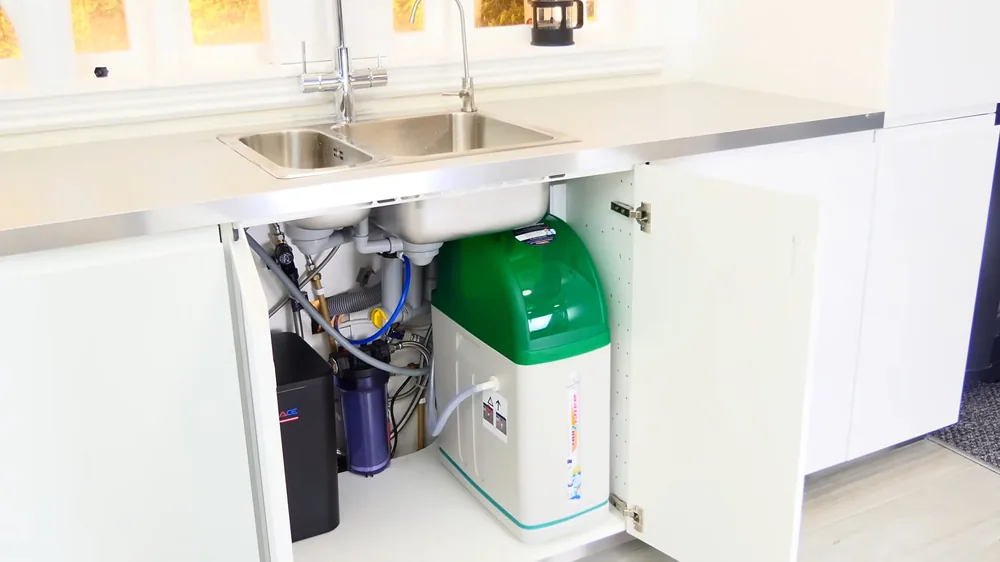
Ask the installer to say where the regeneration water goes and to confirm in writing that the drain connection meets the local code. We did not find an Albany city statement on softener discharge, so ask the city or the plumber rather than assume.
Install, repair and the running cost
A good estimate separates the equipment from the labor and lists what comes with it. Ask for the model, the capacity, a bypass valve and shutoffs, the drain and overflow connection, the first load of salt and the warranty terms in writing. Maintenance is real: salt has to be added, the resin eventually wears out, and the unit should be checked now and then.
- Test the water. Get a hardness number, and ask about iron.
- Choose the equipment. Match a softener, a filter or both to the problem the test shows.
- Install it. The unit goes on the main line with a bypass, a drain and a power source.
- Set it up. The controller is programmed from the hardness reading, and the first regeneration is run.
- Recheck. Test the treated water a week later and confirm the hardness has dropped.
Existing units fail in familiar ways: salt bridges that block the brine, a controller that no longer cycles, or resin worn out after years of service. A visit should say which one it is. If the machine works and the water is still hard, ask for a fresh test before replacing anything.
Heaters, fixtures and the households this suits
Scale is the main reason people ask. It builds on heating elements and tank floors, which is why the pages on repairing a tank heater and tankless heaters both send readers here, and a tankless unit may have its warranty tied to how scale is handled. It also clogs aerators, which is part of the reason a faucet repair visit starts with the tip.
If you rent, a softener is the landlord's decision, since it ties into the plumbing, so ask before spending money. The median home was built in 1974 in American Community Survey data via Point2Homes, and older plumbing can complicate where a bypass and drain can go. Check the plumber's Georgia license class on the Secretary of State's page, and say if the property is commercial when you call.
When you compare quotes, ask whether each one includes a bypass valve, a drain connection and a nearby outlet. Those three details change the amount of work, and a quote that leaves them out has only postponed the question until the installer is already in the utility room.
Hard water problems? Call the line
Tell the dispatcher what you see and whether the water has been tested, and the call is routed to a plumber serving your area.