Tankless Water Heaters · Albany, GA
Tankless Water Heater Services in Albany, GA: Is On-Demand Hot Water Right for Your House?
A tankless heater heats water as it flows instead of storing it. That can suit some houses well and others badly, and the difference is mostly in the gas line, the electrical panel and the water.
What a tankless heater changes in the house
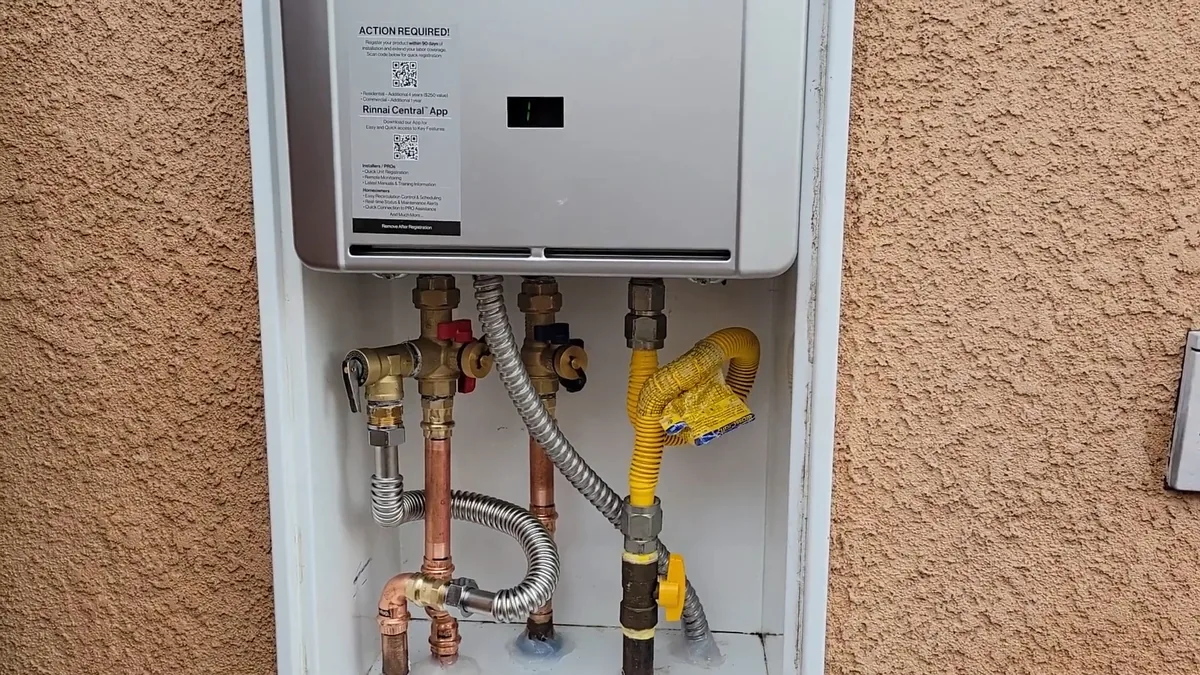
A tank heater keeps a reservoir hot. A tankless unit has no reservoir, so it has to deliver a lot of heat in a moment. That is why the requirements are bigger than the unit looks: a gas model often needs a larger gas line and its own venting, and an electric model needs a high-capacity circuit. Neither is a given in an older house.
Many Albany homes date from the 1970s or earlier. We are not saying older homes cannot take one. We are saying that the assessment of gas capacity, venting and electrical capacity is the first step and not an afterthought, and any quote that skips it is incomplete. If you are weighing it against a tank, see water heater installation for that side of the comparison.
Whole-house, undersink or tank plus small unit: which suits
| Option | What it suits | What to ask |
|---|---|---|
| Whole-house tankless | A household that wants hot water to every fixture without a tank | Can the unit meet the flow if two showers run together? What does the gas or electric supply have to be? |
| Point-of-use or undersink unit | One distant sink or bathroom with long waits for hot water | Does it replace the wait, and what circuit does it need? |
| Keeping a tank and adding a small unit | A single problem fixture on an otherwise fine system | Is the problem the distance, or the main heater? |
A point-of-use unit is a smaller, separate decision. It solves the problem of a faucet far from the heater. It does not heat the house, and it should not be sold as if it does.
Scale, hard water and descaling
Scale is the topic that most separates tankless from tank heaters. Local water is hard by the USGS's description of the aquifer, and the city's water quality report gives no hardness number, so we cannot say what your tap carries. A home test kit or a lab test answers it.
Hard water leaves mineral scale on the heat exchanger of a tankless unit, which can cut flow and trigger error codes. Callers often ask about flushing and descaling for exactly this reason. Ask three things: how often the manufacturer calls for descaling, whether the warranty requires it and proof of it, and whether a water softener should come before the unit goes in.
Sizing a tankless heater: fixtures, flow and winter temperature
A tankless unit is rated by how much water it can heat per minute at a given temperature rise, and the answer depends on how many fixtures run at once. A plumber who sizes it by square footage alone has skipped the real question. These are the items that decide it.
- How many bathrooms, and can two showers run while the dishwasher or washing machine is going?
- What is the incoming water temperature in winter, since colder inlet water cuts the flow a unit can deliver?
- What gas line size and meter does the house have now, or what circuit and panel capacity for an electric model?
- Where will the vent terminate, and does the clearance work on that wall?
- Where will the condensate drain, for a condensing model?
Ask the plumber to write the assumed number of simultaneous fixtures into the quote. If that assumption is wrong, the unit will disappoint no matter how well it is installed.
Tell the dispatcher what you have now and what you want from it. The line is open 24/7.
Gas smell, venting and what to hand to the utility
A gas tankless installation touches the gas supply and the vent, so it is not a job for anyone who cannot show a Georgia license. A gas smell at any point is never a plumber-first call. Get out, dial 911, then notify the gas department at City of Albany Utilities.
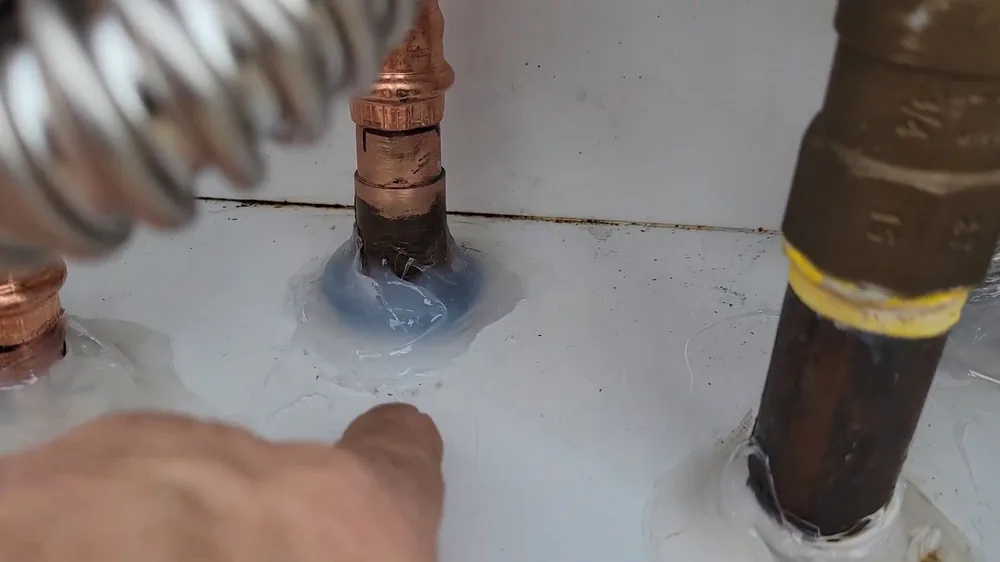
The city says its gas department builds and maintains the gas delivery lines and installs and repairs meters. If a larger gas line or meter is needed, ask who handles which part, and ask the plumber to put the scope of the plumbing work in writing.
Repairing a tankless unit you already have
Tankless units fail in ways tank heaters do not. Common reports are error codes, water that runs cold or lukewarm, and a unit that shuts off. Scale is a frequent suspect, which is why the first question for a repair visit is when it was last descaled. If the answer is never, descaling may fix it.
A sensible service visit on a unit that is losing heat runs in this order:
- Read the code. Note the error code on the display and when it started.
- Check the basics. Confirm the gas supply or breaker is on and the inlet filter is clear.
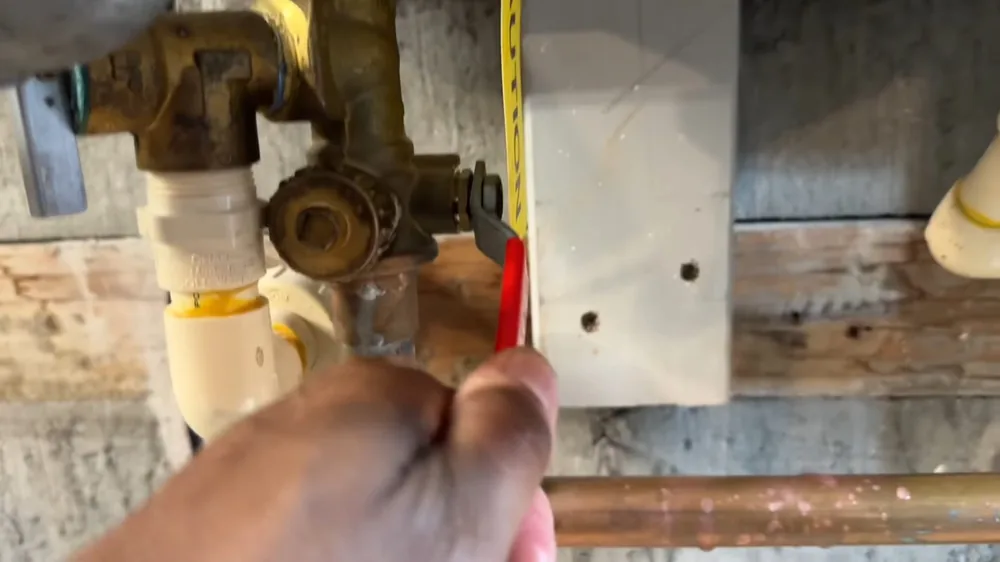
- Flush it. Isolate the unit and run a descaling solution through the heat exchanger.
- Retest. Check flow and temperature at the farthest fixture.
- Decide. If the code returns, replace the failed part or discuss replacing the unit.
Repair or replace is the same decision as with a tank. Ask for the unit's age, what has been repaired already, what the repair costs against replacement and what the manufacturer's warranty still covers. For a tank unit, the matching questions are on the page for repairing the tank you have.
The Albany permit still applies
Swapping to a tankless unit is still a permitted plumbing job in most places, and we found no Albany statement specific to tankless units. Ask who pulls the permit and who books the inspection. The rules the city applies, and the process, are written up under permit steps for a heater replacement, which also applies here.
Is it worth it for your house?
We cannot give you a payback figure, because it depends on your usage and on prices we do not publish. What we can say is that tankless suits households that want to stop running out of hot water, have the supply and venting for it and have a plan for scale. It suits less well a house with hard water and no plan for descaling, or one where the electrical or gas upgrade costs more than the heater.
Ask the plumber to compare both options in writing: the unit, the upgrades it needs and the maintenance it asks for. If you rent, the landlord decides, so ask who authorizes it. Commercial buyers should say so when they call. A Georgia license check takes a minute on the state's lookup page.
Want to talk through a tankless unit? Call the line
Tell the dispatcher what you have now and what you want from it, and the call is routed to a plumber serving your area.