
Leak Detection · Albany, GA
Water Leak Detection in Albany, GA: Find the Hidden Leak Before It Finds Your Floors
A water bill that jumped, a stain that keeps growing or a meter that moves when nothing is running: these all point to water going somewhere it should not. Detection is the step that finds where, and it should end with something in writing.
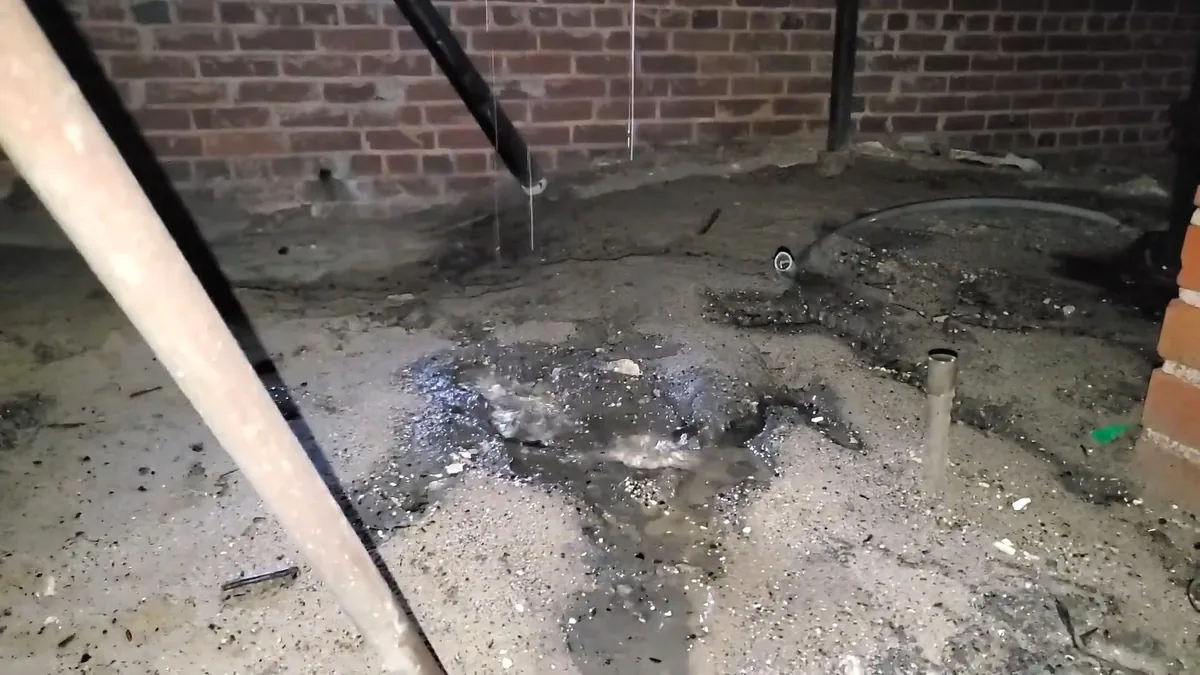
Is your water bill telling you something?
A higher bill by itself is not proof of a leak. Guests, a new habit, a filling pool or a season of heavy watering can all do it. A meter that keeps moving when no one is using water is much harder to explain away, and you can check it yourself in a few minutes.
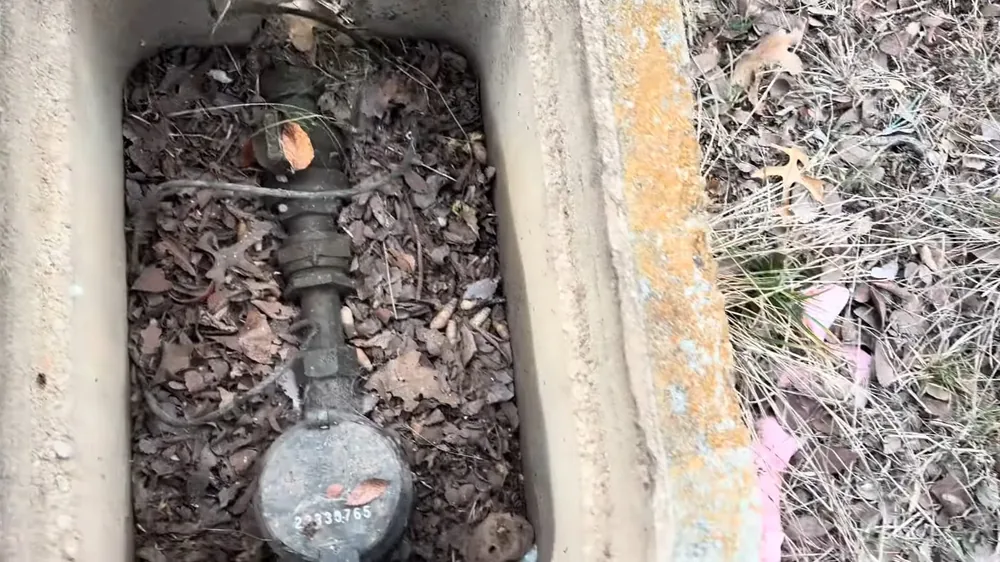
- Stop every use of water. Turn off taps, the ice maker line if you can, the dishwasher and the washing machine, and make sure no one flushes.
- Find the meter. It sits in a box near the street. Lift the lid carefully, and do not pry or force anything inside. If you cannot open it, stop and call.
- Look for movement. Many meters have a small low-flow indicator, a dial or a triangle that spins when even a trickle passes. Note the reading, wait twenty minutes with the water still off, and read it again.
- Write down what you saw. A moving indicator or a changed reading with every fixture off is a finding the plumber can use.
What this check cannot tell you is where the water is going. It also cannot separate a leak in your house from one on the service line between the meter and the house. That is what detection is for.
Where hidden leaks tend to be
Water takes the path of least resistance, so the stain you see is often not where the pipe is broken. Four places account for most hidden leaks, and each has its own clues.
| Where it is | Clues | Who looks at it |
|---|---|---|
| Inside a wall or ceiling | A stain that grows, paint that bubbles, a musty smell, damp drywall that is cool to the touch | A plumber, often with a moisture meter and an opened access point. |
| Under the floor or in a crawlspace | A warm floor spot, the sound of running water at night, soft or lifted flooring | A plumber. See slab leak repair if the home is on a slab. |
| On the service line, outside | A wet or unusually green patch in the yard, a meter that moves with the house shut off | A plumber, and the city for anything at or before the meter. |
| Inside a fixture | A toilet that refills by itself, a drip under a sink or around a tub spout | A plumber, or see toilet repair and faucet and sink repair. |
Copper supply pipes can develop pinhole leaks, small enough to drip for a long time without showing at the surface. If you have a hissing sound in a wall and no visible water, say so on the phone. In a home with a basement or a crawlspace, look at the pipes and the floor above for damp spots. Leaks there tend to show up as moisture on framing, insulation or the ground before they show up as a stain upstairs. We found no Albany-specific source on what causes pinholes locally, so we do not claim one.
Acoustic, thermal and camera methods: what to ask for
Detection methods vary. Plumbers commonly listen to pipes with acoustic equipment, scan with a thermal camera, trace a line electronically and send a camera into drains. Each has limits. Listening works best when the pipe is under pressure and the house is quiet, a thermal image shows temperature differences but not their cause, and none of them replaces a plumber's judgment. Ask which method is being used and what it cannot tell.
The test of a good visit is the paperwork. Ask for:
- Which pipe is leaking, and where, described so that someone else could find it.
- Photos or a short video of the source or the reading that located it.
- Whether the wall, floor or yard has to be opened, and an estimate before it is.
- What else was checked and ruled out.
- A written note you can give an insurer or a landlord.
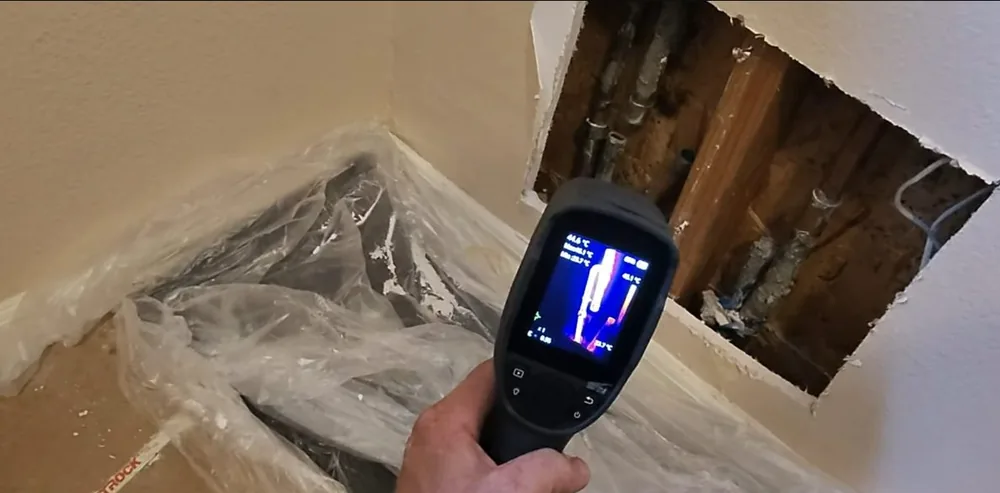
If the leak turns out to be a split pipe with water running now, the steps are on the page for repairing a split pipe. If it has already soaked a floor, drying out the soaked floor is its own job.
Tell the dispatcher what you saw and when. The line is open 24/7.
Not every leak is a plumbing leak
People call about water in the house when the source is something else. Telling those apart saves a visit.
- A ceiling stain that appears only after rain is likely the roof, so call a roofer first.
- Water at the foot of a wall after a storm may be surface water or gutters, not a pipe.
- A swimming pool that loses water, or an irrigation zone that stays wet, is a pool or irrigation contractor's job.
- A gas smell is never a plumbing leak call first. Leave the building, call 911 and notify the gas department at City of Albany Utilities.
If you are not sure which one you have, the meter test above helps. A meter that is still when the house is off points away from your pipes. A meter that moves points toward them. Our role is the plumbing side of that question, so tell the dispatcher what you ruled out.
Wet spots, sunken patches and the ground under Albany
The U.S. Geological Survey describes the Dougherty Plain as karst terrain, with the Upper Floridan aquifer beneath 20 to 80 feet of overburden. The city closed Hilsman Park over a sinkhole on June 11, 2026, and announced the closure of W. 2nd Avenue at N. Cleveland Street after a sewer collapse in December 2025. Neither notice states a cause, and we are not linking either one to a leak.
What we can say is practical. A new wet spot, a depression or sunken pavement near a water or sewer line is worth a camera inspection and a plumber's written note. If it is in the public right of way, call the city, too. For the city's utilities line, the number is 229-883-8330, according to the City of Albany Utilities page. The city page does not say who owns the service line between the meter and the house, so ask when you call.
Early signs of a hidden leak and what to do in the meantime
Small leaks announce themselves before big ones. Watch for a musty smell in a closed room, a faint rise in the bill, paint that blisters, a toilet that runs briefly on its own and the sound of water in a wall at night. Ignoring them turns a pipe repair into a flooring and drywall repair, which is why catching a leak early is worth a service call.
While you wait for a plumber, move anything valuable off the wet area, photograph the damage and close the water at the main if the leak is active. If you rent, tell the landlord or property manager at the same time you call, since most Albany households are tenants.
Leak detection for a business is a different scale of job. Say that it is a commercial property when you call so the dispatcher knows what to ask, and check the plumber's Georgia license class through the state plumbing license page before work begins.
Think you have a hidden leak? Call the line
Tell the dispatcher what the meter did and where the stain or wet spot is, and the call is routed to a plumber serving your area.